Welcome to Dukal Technologies. Your Trusted Professional Placement Partners of Choice.

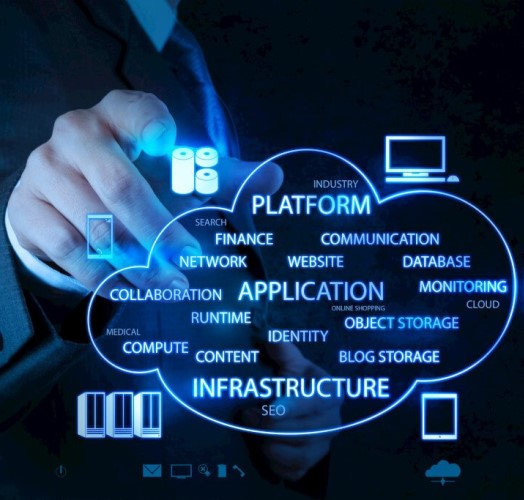
Cloud computing provides Convenience, Reliability, Security and Scalability to your business
IaaS is a cloud computing service model that provides virtualized computing resources, such as virtual machines (VMs), storage, and networking, over the internet. Customers can use these resources to run their own applications and services, and only pay for what they use.
PaaS is a cloud computing service model that provides a platform for customers to develop, run, and manage their applications, without having to worry about the underlying infrastructure. PaaS typically includes services such as databases, application servers, and development tools.
Serverless is a cloud computing service model that allows customers to run their applications and services without having to manage or provision any servers. Serverless computing provides a way to build and run applications and services without having to think about the underlying infrastructure.
SaaS is a cloud computing service model that provides customers with access to software applications over the internet, without having to install or maintain any software locally. SaaS is typically delivered on a subscription basis, and customers only pay for what they use
Our consultants will play a key role in helping your organization implement a cloud computing solution, by providing the technical expertise and best practices needed to ensure a successful transition and maximize the benefits of cloud computing.
We can assist with the following:
Cloud computing can significantly reduce the capital expenditures associated with setting up and maintaining IT infrastructure and applications. By using shared infrastructure and resources, businesses can reduce their IT costs and avoid the need for large upfront investments in hardware, software, and staffing.
Cloud computing provides businesses with the ability to scale their computing resources up or down as needed, without having to invest in additional hardware. This allows businesses to quickly respond to changes in demand, such as spikes in traffic or increased user adoption.
Cloud computing allows businesses to choose the computing resources they need, when they need them, and only pay for what they use. This provides businesses with the ability to quickly pivot and respond to changing market conditions and business needs.
Cloud computing providers offer high levels of reliability and availability for their services, often with service-level agreements (SLAs) that guarantee a certain level of uptime. This can help businesses ensure that their critical applications and data are always accessible, even during outages or other disruptions.
Cloud computing can provide businesses with faster time to market for new products and services, as well as improved responsiveness to changing business needs. By using cloud-based tools and platforms, businesses can rapidly prototype, test, and deploy new applications and services.
Cloud computing providers offer robust security measures, such as encryption, firewalls, and access controls, to protect their customers’ data and applications. This can help businesses improve their security posture and reduce the risk of data breaches and cyber attacks.
Cloud computing allows businesses to access their applications and data from anywhere with an internet connection, improving mobility and collaboration. This can help businesses better support remote work and increase the productivity of their employees.
Cloud computing provides businesses with access to the latest technologies and innovative services, enabling them to stay ahead of the competition. By using cloud-based tools and platforms, businesses can take advantage of new technologies, such as artificial intelligence and machine learning, to improve their operations and offerings.
Cloud computing can provide businesses with improved disaster recovery capabilities, as their data and applications can be stored in multiple locations for redundancy. This can help businesses ensure that their critical applications and data are always available, even in the event of a natural disaster or other catastrophic event.
Cloud computing can help businesses reduce their carbon footprint and improve their environmental sustainability by reducing the need for local hardware and power consumption. By using shared infrastructure and resources, businesses can reduce their energy consumption and minimize their impact on the environment.